








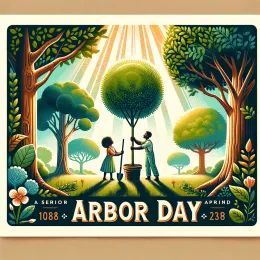
Create a card or greeting about Arbor Day with AI


Please wait 10–15 seconds while we create your unique greeting. This process ensures full personalization just for you! Do not leave or reload the page to avoid losing progress. Thank you for your patience!
Celebrating Arbor Day: A Global Tribute to Trees
Arbor Day is a special occasion celebrated worldwide, dedicated to the planting and caring of trees. This day serves as a reminder of the importance of trees in our environment and the vital role they play in sustaining life on Earth. Communities come together to honor nature, educate individuals about the benefits of trees, and promote reforestation efforts.
The significance of Arbor Day extends beyond mere tree planting; it embodies a collective commitment to preserving our planet for future generations. As we delve deeper into the history, traditions, and impact of this celebration, we discover how it has grown into a global movement that fosters environmental stewardship.
History of Arbor Day
The origins of Arbor Day date back to the 19th century, when J. Sterling Morton, a Nebraska newspaper editor, advocated for tree planting in the arid landscapes of the American Midwest. His vision led to the first official Arbor Day celebration on April 10, 1872, where an estimated one million trees were planted across Nebraska.
As the idea gained popularity, other states began to adopt their own Arbor Day celebrations. By the early 20th century, Arbor Day had spread internationally, with various countries establishing their own dates and customs. Today, many nations observe this day, each with unique traditions reflecting their cultural values and environmental needs.
Why Trees Matter
Trees are essential to our ecosystem, providing numerous benefits that enhance both the environment and human well-being. They improve air quality by absorbing carbon dioxide and releasing oxygen, which is crucial for life. Additionally, trees play a vital role in combating climate change by acting as carbon sinks.
Beyond their environmental significance, trees offer social and economic benefits. Urban areas with ample tree cover experience reduced heat, improved aesthetics, and increased property values. Furthermore, trees provide habitats for countless species, contributing to biodiversity and ecological balance.
Environmental Benefits
- Air purification and oxygen production
- Soil erosion prevention
- Water cycle regulation
- Climate moderation
Social and Economic Benefits
- Enhanced property values
- Improved mental health and well-being
- Increased community engagement
- Job creation in forestry and landscaping
How to Celebrate Arbor Day
Celebrating Arbor Day can take many forms, from planting trees in your backyard to participating in community events. Here are some engaging ways to observe this important day:
- Join a local tree-planting event organized by schools, parks, or environmental organizations.
- Plant a tree in your yard or community space, selecting species native to your area.
- Educate yourself and others about the importance of trees through workshops or seminars.
- Support local nurseries and tree farms by purchasing trees for planting.
Global Observances and Traditions
While Arbor Day is widely recognized, the way it is celebrated varies significantly across different countries. In some places, it is a public holiday, while in others, it is marked by community service initiatives. Here are a few notable examples of how Arbor Day is celebrated around the world:
United States
In the U.S., Arbor Day is celebrated on the last Friday in April. Many states have their own designated days based on the best planting times for local climates. Schools often participate by organizing tree-planting activities, educating students about the importance of trees, and promoting environmental awareness.
Brazil
In Brazil, Arbor Day is celebrated on September 21st, coinciding with the arrival of spring. The day is marked by tree-planting campaigns, particularly in urban areas, to combat deforestation and promote green spaces in cities.
Japan
Japan observes Arbor Day on April 29th, known as Showa Day. This day commemorates the birthday of Emperor Showa and encourages citizens to appreciate nature. Various events, including tree-planting ceremonies and nature walks, are organized to promote environmental education.
Educational Initiatives
Education plays a crucial role in fostering a culture of environmental stewardship. Many organizations utilize Arbor Day as an opportunity to engage students and communities in learning about trees and the environment. Schools often incorporate lessons on the ecological importance of trees, encouraging students to participate in tree-planting projects.
Workshops and seminars can also provide valuable insights into sustainable forestry practices, the significance of biodiversity, and the impact of climate change on our planet. By equipping individuals with knowledge, Arbor Day serves as a catalyst for long-term environmental advocacy.
Community Engagement
Community involvement is at the heart of Arbor Day celebrations. Local governments, non-profit organizations, and citizens collaborate to organize events that promote tree planting and environmental awareness. These initiatives not only beautify neighborhoods but also foster a sense of unity and shared responsibility for the environment.
Participating in community events allows individuals to connect with like-minded people, share resources, and learn from one another. Such engagements can lead to the establishment of community gardens, urban forests, and other green initiatives that enhance local ecosystems.
Challenges and Solutions
Despite the positive impact of Arbor Day, challenges remain in promoting tree planting and environmental conservation. Deforestation, urbanization, and climate change pose significant threats to tree populations worldwide. Addressing these issues requires a multifaceted approach, combining education, policy advocacy, and community action.
Innovative solutions, such as urban reforestation projects, sustainable logging practices, and conservation programs, can help mitigate the effects of deforestation. Engaging local communities in these initiatives ensures that they are invested in the long-term health of their environment.
Future of Arbor Day
The future of Arbor Day looks promising as awareness of environmental issues continues to grow. With increased global collaboration and a focus on sustainability, more individuals and organizations are recognizing the importance of trees in combating climate change and preserving biodiversity.
As we look ahead, it is essential to maintain the momentum generated by Arbor Day celebrations. By fostering a culture of tree planting and environmental stewardship, we can ensure that future generations inherit a healthier, greener planet.
Get Involved
Everyone can play a role in celebrating Arbor Day and promoting tree planting. Whether you are an individual, a family, or part of a larger organization, there are countless ways to contribute. Consider reaching out to local environmental groups to learn about upcoming events or initiatives in your area.
Additionally, you can advocate for policies that support reforestation efforts and sustainable land management. By spreading awareness about the importance of trees and encouraging others to participate in Arbor Day activities, you can help create a lasting impact on your community and the environment.

Best Examples of wishes













FAQ
Interesting Articles and Tips for holidays and wishes

How to Make Digital Invitations for Your Next Party

Top Tips for Creating Personalized Greeting Cards Online

Best Wishes: Crafting Unique Birthday Greetings Easily

Why AI Enhances Creativity in Writing Holiday Greetings

Celebrate Milestones with AI-Powered Congratulation Cards



Ваш отзыв добавлен!